Sunday, April 1, 2012

Transcendentalism and the Libertarian Party

       While reading the selections from Emerson and Thoreau, I noticed a common element: independence. Independence is what many believe makes a person successful. Before the days when government interfered in almost every element of the lives of American citizens, the most respected figures in society were totally self-reliant and idolized for their independence.
       Key figures in American history stressed the importance of independence. People like Thomas Jefferson, Thomas Paine, and even Henry David Thoreau have been credited with the famous quote, "That government is best which governs least." Though it is not sure which one of these men actually said this quote, I am sure they would all agree on its meaning. (http://www.quotecounterquote.com/2010/06/that-government-is-best-which-governs.html)
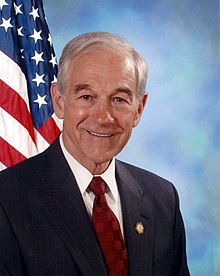
       A modern-day kind of transcendentalism is seen in the Libertarian party. Libertarians (like Congressman Ron Paul, pictured above) believe in the rights of the individual. My history professor once said that the view of Libertarians about government is "Pick up my trash, don't let anyone mess with my property, and leave me alone." Libertarians believe that people should be allowed to do pretty much whatever they want as long as they do not infringe on the rights of others. (http://www.libertarianism.com/content/libertarianism-101/lib_101)
       People like Ron Paul believe in doing away with taxes and adopting a foreign policy in which we do not help other countries unless we are directly affected. These same ideas can be seen in the work of transcendentalists. They are against powerful governments and societies. In "Self-Reliance" by Ralph Waldo Emerson, he says, "Society everywhere is in conspiracy against the manhood of every one of its members."
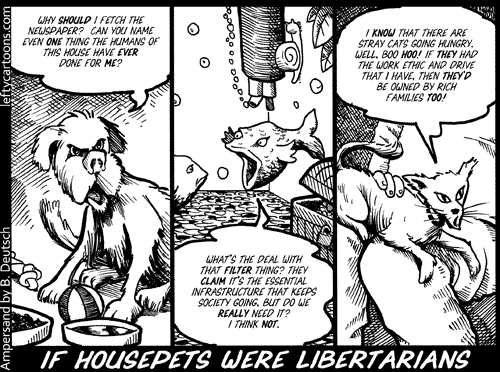
       So what about charity and helping others? Libertarians believe that the decision to give to private charities is left up to to the individual, but should not be required by the government through welfare programs. (http://www.libertarian.co.uk/lapubs/econn/econn110.htm) Transcendentalists seemed to believe that charity in general does more harm than good. They believed that the well-being of others was not their responsibility, like Emerson saying, "Are they my poor?"
       Transcendentalism and Libertarianism can both seem like harsh ways to view society. Though Libertarianism is not quite as extreme as transcendentalism, it has very similar key elements. It is probably safe to say that government policies, like welfare and taxation, will never be radically changed the way Libertarians would like. However, if Libertarians continue to be elected, some of their policy changes could show up soon.

This is what Libertarians believe from the perspective of a Libertarian:


Sources:
Picture 1: http://upload.wikimedia.org/wikipedia/commons/thumb/9/9d/Ron_Paul,_official_Congressional_photo_portrait,_2007.jpg/220px-Ron_Paul,_official_Congressional_photo_portrait,_2007.jpg
Picture 2: http://amptoons.com/blog/wp-content/uploads/2009/06/libertarian_housepets.png
Picture 3: http://garretr1112.edublogs.org/files/2012/01/tumblr_lmr5kznjtJ1qjda9lo1_500-14yjzs5.jpg
Video: http://www.youtube.com/watch?v=PgTnjTm3YhQ

Sunday, March 18, 2012

Comparing the Tell-Tale Heart and The Cask of Amontillado

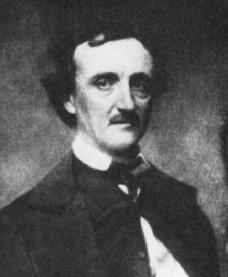
       When I was reading these two selections, I noticed that they had some interesting similarities and differences. All of Poe's works are dark and usually contain some type of suspense. These two were similar in that they both seemed to hint at the narrator being psychotic.
       In "The Tell-Tale Heart", the narrator does not give a logical reason as to why he wants to kill his neighbor. He says that his neighbor's pale blue eye is the reason. This is obviously not a legitimate reason to kill someone, or even become angry. However, the author tells the story with such rationale that by the end of the story, the reader almost forgets the ridiculous reason for the man's murder.(http://www.sparknotes.com/lit/poestories/section6.rhtml)
       In "The Cask of Amontillado", which is also involves the narrator committing murder, there is somewhat of a different plot. In this reading the narrator, Montressor, talks about revenging the "thousand injuries" brought upon him by Fortunado. Though it would seem to the reader that revenge is a more logical reason to kill someone than how they look, the Montressor never explicitly states what Fortunado did to wrong him. On Poe's part, this suggests the narrator has psychological issues because since he did not inform the reader of what happened, whether or not it is something that merits punishment by death is solely up to the narrator's judgement.
       Both of these stories detail premeditated murder, and the careful way each of the narrators plan to kill his victim. (http://www.poedecoder.com/essays/cask/#style) The difference is the fear of being caught. In "The Tell-Tale Heart", the author can hear the heart of his victim beating and fears that the police can hear it as well. In "The Cask of Amontillado", the narrator is sure no one will ever find out about Fortunado's demise at his hands.
     Poe's way of writing dark, creepy, murderous stories is often repeated today. The scary psychological element is often used today and is wildly popular. It is often suspected that Poe had psychological issues himself, but the only thing known for sure is that he had difficulties in his everyday life.


Picture 1: http://www.notablebiographies.com/images/uewb_08_img0559.jpg
Picture 2: http://thetelephonebooth.files.wordpress.com/2011/03/edgar-allen-poe-1.jpg
Video: http://www.youtube.com/watch?v=-XTmWag6wfw

Sunday, March 11, 2012

Washington Irving and the Underdog

       Ichabod Crane is the ultimate underdog. He is a skinny, lanky, day-dreaming man hoping to win the heart of a woman that most would consider to be his superior because of her wealth and beauty. (http://www.voanews.com/learningenglish/home/a-23-2006-04-23-voa4-83129372.html) This is a plot that everyone is familiar with: the boy who doesn't seem to have much hope is fighting a stronger male for the affections of a lovely lady, which neither really seems to deserve. The majority of films and books today use this same storyline because audiences love to root for the underdog, and usually the underdogs are successful (with the exception of Ichabod Crane). I started to think of some present-day books and movies that had audiences rooting for the least likely character.

       The most recent movie like this that I could think of was "The Vow" with Rachel McAdams and Channing Tatum. Channing Tatum's character must make his wife, Rachel McAdams, fall back in love with him after she loses her memory. The last thing she remembers is being engaged to someone else, a man who is more successful and wealthier than Channing Tatum. (http://www.imdb.com/title/tt1606389/) No one seems to like the strong, assertive characters in those type of films except for the girl, but in the end the underdog wins.


Another example that is a little different is the Movie "Bridesmaids". In this case, two of the characters are fighting to be the best friend of Lillian, played by Maya Rudolph. Kristen Wiig plays the underdog character Annie, a seemingly hopeless and eternally single 30-something working a job that barely plays her rent. The antagonist, Helen, poses a wealthy, beautiful, successful threat to Annie's friendship with Helen. (http://www.bridesmaidsmovie.com/index.php) After seeing Helen's schemes to ruin that friendship, audiences sided with Annie and rooted for her throughout the movie.
       Usually, audiences are furious and frustrated when the underdogs do not come out on top, and they hate to see when those strong, usually mean, characters are victorious. Washington Irving ended his writing a little differently than most would have wanted, with the alpha character Brom Bones getting the girl, thus shattering the hopes of the poor dreamer Ichabod Crane.

Sources:
Video: http://www.youtube.com/watch?v=armKM1-kYY8
Picture 1: http://cdn2.teen.com/wp-content/uploads/2011/11/rachel-mcadams-channing-tatum-the-vow-movie-cast-pic-2.jpg
Picture 2: http://www.onlinemovieshut.com/wp-content/uploads/2011/01/bridesmaids-movie-poster.jpg

Thursday, March 8, 2012

Modern-Day Slavery

       I thought it was interesting that right before we started reading Frederick Douglass, I became aware of modern-day slavery. The majority of people, especially in the United States, believe that slavery no longer exists. They may also believe that slavery exists, but just not in America. This is far from the truth. Between 600,000 and 800,000 people are trafficked across international borders annually. According to a 2005 report from the U.S. State Department, between 14,500 and 17,500 of these are in the United States. (http://thecnnfreedomproject.blogs.cnn.com/category/the-facts/) Through research, I found that there are a number of key similarities and differences in the type of historical slavery we are familiar with and slavery that occurs today.                                                 Slave locations in the United States today
       Slavery today is more commonly known as "trafficking". It involves capturing another individual by force or violence, and exploiting them for sex, labor, or servitude. It can often involve selling them to another person for these same reasons. Historical slavery began in a similar way. Europeans came to Africa and forced the people there into labor and servitude. Another means of getting an individual to be trafficked is by deceiving them instead of forcing them. Similar things happened in history. Many men agreed to work as slaves in exchange for the opportunity to come to America, but then worked so hard that they often died before they earned their freedom or found that they could not support themselves after earning it.
       Something that I found totally heartbreaking was that in other countries today, many parents will willingly sell their children because their poverty is so extreme. Oftentimes, they trust that the person they are selling them to will be good to them, but many times this is how children ended up being enslaved and exploited. (http://thecnnfreedomproject.blogs.cnn.com/) One of the fastest-growing areas in trafficking is prostitution. Many girls are kidnapped and forced into prostitution, but there are also some that choose this lifestyle for themselves. With no education and no money, they feel that this is their only choice.
       One difference between the two is the money that goes into it. In 1809, slaves would sell for about $40,000 by today's standards. In 2009, a slave could be purchased for $90. Historically, slaves were sometimes seen as a status symbol and a way to show that one had wealth. Slaves were not treated well, but generally masters wanted to make sure their slaves were healthy because they were expensive to replace. Today, this is not a concern because of their low cost. It is obvious that one takes better care of something they spend a lot of money on.
       There are about 27 million slaves in the world today. That is more than there have ever been, including the African slave trade. (http://ngm.nationalgeographic.com/ngm/0309/feature1/) It is ranked third in profit generation by a criminal industry, behind illegal drugs and arms trafficking. It generates $32 billion annually.
       The previous solution to the problem of slavery was legal action. With the passage of the 14th Amendment and Lincoln's Emancipation Proclamation, slaves were freed from their owners. In the U.S. and other countries with similar laws, now the issue becomes awareness and enforcement of the law.

Sources:
Picture 1: http://joeyannasjourney.files.wordpress.com/2012/01/not-for-sale-2.jpg
Picture 2: http://www.slaverymap.org/
Video: http://thecnnfreedomproject.blogs.cnn.com/category/life-in-slavery/

Sunday, February 26, 2012

The Hunger Games as a Captivity Narrative

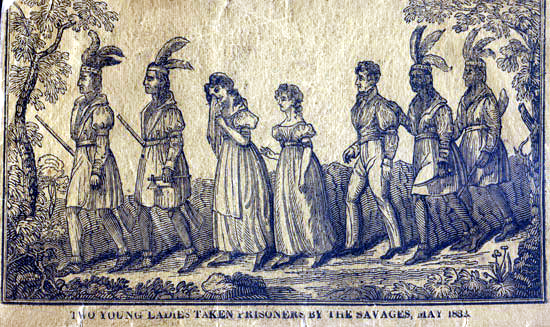
After reading Mary Rowlandson’s story of her captivity, I started trying to think of modern captivity narratives and their similarities with Rowlandson’s. My first thought, which surprised me, was “The Hunger Games” series by Suzanne Collins. This is a very different kind of captivity narrative, but I was curious to see if the series was written in a way that was similar to Rowlandson’s.
The key difference in “The Hunger Games” and Rowlandson’s narrative is that “The Hunger Games” is strictly fiction. The story takes place in the future in what used to be North America. In the story, North America is called Panem and consists of twelve very poor districts which are controlled by a tyrannical government called the Capitol. All of the power and wealth is concentrated in the Capitol, and the people are powerless against it. The Capitol controls everything, including laws, how much food and resources districts will receive, punishment, and most importantly a contest called the Hunger Games. During the Hunger Games, two children are selected from each district to fight to the death while the world watches, hoping to win a year’s worth of resources for their district. (http://www.scholastic.com/thehungergames/about-the-book.htm)
It is not that there are limited resources. The Capitol could easily provide supplies for all of the districts. The purpose of the Hunger Games is to show the people that the Capitol is in control and rebellion will not be tolerated.
So in a sense the main character Katniss Everdeen, who must participate in the Hunger Games, is a captive. She is oppressed by the government, and forced to do something which puts her safety in danger in order to prove to the people how powerful the government is.
The first thing I noticed that the two writings had in common was the reasons why they are popular. Captivity narratives and “The Hunger Games” gained their popularity because they are sensational. They contain acts of violence, which seem to amaze the public. People are fascinated by stories that take them away from their daily lives, even though they can consist of horrendous murders and cruelty.
Captivity narratives focus on people who lead ordinary lives being brought into slavery without warning. Rowlandson discusses how she was doing mundane activities and enjoying a quiet day at home when she was captured. Similar things happen in “The Hunger Games”. The story begins by telling stories of Katniss’s everyday life, hunting in the woods with her friends and spending time with her family. She is brought from a state of relative innocence into living in a constant state of a consuming fear for her life and the lives of her family members, just like Mary Rowlandson. Also, both are continually threatened with the death of their families in order for their captors to control them.
Like Mary Rowlandson, Katniss is extremely opposed to submitting to what her captors want her to do, but is powerless to truly rise against them. The Capitol could easily kill her, so she has to be secretive in her acts of rebellion. Mary Rowlandson experiences this same dilemma, because though she detests the idea of submitting to the Native Americans, she fears for her life and her family’s lives.
Throughout the series, Katniss follows the plot of captivity narratives exactly and has many similar experiences. Because being captured by Native Americans or being forced to fight for food by an all-powerful government are foreign ideas to us, we are extremely interested to read these kinds of stories. This is made obvious by the numerous awards “The Hunger Games” has been nominated for. (http://www.suzannecollinsbooks.com/the_hunger_games_69765.htm)

Tuesday, February 14, 2012

"Common Sense" Literary Devices

     
       It is undeniable that Thomas Paine's "Common Sense" is one of the most influential documents ever published. So many of his ideas form the foundation of what it means to be an American. His work opened the eyes and minds of the American people to the liberal idea of declaring independence, dramatically changing the future of the country. With ideas in which the risk equaled the reward, he had to have done something right with his writing to convince the American people that independence was worth a shot. I wondered what exactly that was. Was there a certain way he worded his document that caused the huge impact? Did he use literary devices to persuade, or did his message do that on its own?
      The first thing I noticed about the way in which the pamphlet was written is the simple writing. Paine did not write to impress important scholars and leaders of the time. He wrote to reach the American public as a whole, mustering all the support he could get. (http://www.ushistory.org/paine/commonsense/) He wanted to grab the attention of the people at the heart of the cause.
       The first paragraph of the writing really caught my attention because of the way he admitted that action on account of his idea might be premature. However, he turns this around by saying "...a long habit of not thinking a thing wrong gives it a superficial appearance of being right, and raises at first a formidable outcry in defence (defense) of custom. But the tumult soon subsides. Time makes more converts than reason." This sentence serves the purpose of telling the people that his idea is one of the future, and that eventually people will realize how they have been wronged. It is a known fact that people love to be right. Even today, everyone wants to claim they liked a band before they were mainstream, or liked an actor before they were really popular. The same idea can be applied to political ideas. People at the time may not have wanted to be seen as the "last ones to the party" so to speak, therefore they could have bought into Paine's ideas hoping they wouldn't be left behind.
       Countless times in his work, Paine uses an appeal to logos. The title itself makes this so obvious. "Common Sense" infers that it is without question. Anyone who believes America has a bright future under the rule of Britain has no common sense. He says "In the following pages I offer nothing more than simple facts, plain arguments, and common sense..." in Thoughts on the Present State of American Affairs. He also uses understatements as examples of the faulty logic that tories had. An example of this is "We may as well assert that because a child has thrived upon milk, that it is never to have meat, or that the first twenty years of our lives is to become a precedent for the next twenty." It is obvious that those statements are not true, so he is hoping people will see the reasoning to stay with Britain as illogical.
        Something that I thought was odd about this document was the Biblical references Paine used to make his point and reach his audience. Paine goes into great detail about his skeptical thoughts on Christianity in other writings, and actually denounced the religion after listening to one of his father's sermons. (http://socyberty.com/history/rhetorical-analysis-of-paines-common-sense/) Though religion was not seen as very important in Paine's life, it was important in the life of the American people. This was something Paine used to appeal to their moral beliefs, somewhat convincing them that freedom is what God wanted for America.

Picture 1: http://nataliecopuroglu.com/wp-content/uploads/2011/03/only_common_sense.jpg
Picture 2: http://www.americanmanufacturing.org/files/american-flag.jpg
Video: http://www.youtube.com/watch?v=Zgce_ai9nQQ

Sunday, February 12, 2012

Persuasion in the Great Awakening vs. Present-day Persuasion

Companies use their years of establishment to convince the public that they have experience.


Ads sometimes use celebrities to convince people to perform a behavior.


      To say that the way the human mind works is “interesting” would be an understatement. Our minds are so complex that much research and study has to be done to understand why people choose to believe in some things and not in others. The art of persuasion is one that is important in situations ranging from convincing a child to eat his vegetables to completely altering the public’s view of the world. After reading “Sinners in the Hands of an Angry God”, I became interested in society’s reception to the message of Jonathan Edwards. Why were they convinced by what he said? How do the methods Edwards used compare with those used by people who hope to influence the public today?
       I began researching to find out what the basic methods of persuasion were, and found some good examples on http://medialiteracyproject.org/language-persuasion. The first method that I thought was used to convince people in the Great Awakening that is still used today is the use of experts. People during the Great Awakening viewed preachers like Edwards as experts on God’s word and will. This could be one reason why his sermon was so influential. This form of persuasion is often used in commercials by companies advertising things like toothpaste, vitamins and medicine. “#1 doctor recommended” and “4 out of 5 dentists agree” are phrases that often cause the public to believe that people who have more knowledge than they do recommend products or use them themselves.
       Another one that really stood out to me, because of the extreme way Edwards used it, was fear. Edwards used scare tactics in order to convince his audience that they were not doing God’s will. He used vivid imagery about eternal damnation as a result of sin to capture the crowd’s attention and convince them to repent and be saved. Some churches still use this method, and there are people today who have been saved in similar ways. (http://www.intoutreach.org/testimony4.html) This method is also used today in lesser ways. For example, a commercial advertising gum might show someone with bad breath being rejected or embarrassed in public. If people fear that might happen to them, they are more likely to buy gum that says it will prevent those embarrassing situations.
       In some ways, Edwards also used the “slippery slope” technique. He tells the people that while they may not see the effects of their sin now, their continuance in sin will eventually result in God's wrath and it will be too late to fix. These type of arguments are seen all the time in politics. I once heard a member of the Libertarian party use this argument against President Obama’s healthcare plan by saying that if the government can tell us to buy healthcare because it’s good for us, eventually they could tell us to buy broccoli because it’s good for us.
The methods of persuasion haven’t changed much over the years, only the form in which they are presented (commercials, radio, etc). It is apparent that Jonathan Edwards knew how to present his information in a way that people responded to, because the public response was so great.